UK motor 2025: profits rose again, confounding the forecasts
We expected motor profits to fall back from 2024's highs. Our first look at 2025 disclosures, covering nearly 90% of the market, shows the opposite. What is driving it?
When we started analysing the 2025 regulatory disclosures of UK motor insurers, we expected profits to fall back from the highs of 2024. The results suggest the opposite.
Our preliminary findings draw on the 25 firms that published their SFCRs earliest, together nearly 90% of the market by gross written premium.
The headlines
- Premium fell sharply: gross written premium shrank by 4%, reversing the strong growth of 2024.
- Profits rose anyway: disclosed combined ratios improved from 87% to 84%. 23 of the 25 firms reported combined ratios below 100%, up from 20.
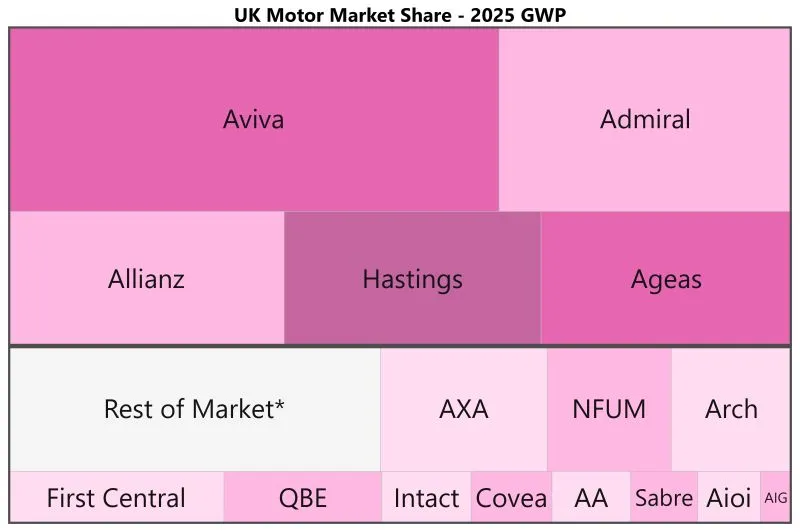
- The A-Team reshuffled: Ageas slipped from third to fifth largest, shedding around 13% of its premium. Hastings, the only one of the five to grow (by nearly 16%), moved up to fourth. Aviva's premium fell by the most, about £550 million.
- Gibraltar: Gibraltar-based insurers wrote 35.8% of UK motor premium, a small increase on 2024.
- Capital: the median Solvency Ratio rose by 2 points to 171%.
As good as it gets?
Premiums fell markedly from their 2024 high, but claims fell further. We think the explanation will lie in three areas:
- Road and vehicle safety. Are we reaching a tipping point from the cumulative effect of vehicle safety technology and the spread of 20mph limits?
- Social and economic change. Are drivers slowing down to save fuel? Are policyholders more reluctant to claim? Are younger drivers, helped by telematics and changing attitudes, becoming less risky, or simply passing their tests later?
- Balance sheet management. Did firms strengthen reserves in 2024 on the back of exceptional profits, and is some of that now feeding back into results?
We also asked where the business shed by Aviva, Allianz and Ageas has gone, and whether its new underwriters have priced it profitably. Time will tell.
Our combined ratio measure excludes PPOs and unallocated expenses so that firms can be compared on a like-for-like basis, so actual underwriting profits are likely to be lower than shown. We will extend the study to the rest of the market, including most Gibraltar firms, later in the year.
What do you think is driving these profits, and how long will the good news last? We would be glad to hear from you.